







Brockwell Hall, a Georgian-era ‘country house’ in the centre of Brockwell Park, saw its future hang in the balance during the late 19th century. 100 tumultuous years later, the stunning hall is undergoing a restoration set to reinstate the building as the centerpiece of the park.
Surprisingly, the hall predates Brockwell Park. While the 125-acre parkland officially opened in 1892, the current Brockwell Hall was built between 1811 and 1813. Since then, its walls have witnessed the park grow around it; becoming grazing land for wartime farm animals and a training ground for squaddies.
But in the early 18th century, the area around Herne Hill and south Brixton was a rural idyll – very different from the urban sprawl people know today. Large estates and country houses were scattered across rolling fields, owned by wealthy merchants and landowners seeking residence or a temporary retreat from the bustle of London.

Among those opulent families was that of John Blades, the capital’s most significant glass manufacturer, known for supplying glassware to George III and other Royal Family members. He purchased part of what was called the Brockwell Estate and commissioned architect D. R. Roper to design a stately mansion for him and his family.
The result was Brockwell Hall. Constructed from yellow stock bricks with stone dressings, the building was carefully nestled along the ridge of the hill. This allowed it a commanding view of London without being too overbearing on its surrounding landscape. The design was a reflection of the Regency style, characterised by symmetrical form, restrained ornamentation, and spacious interiors.
A £3.3 million project to restore the hall, funded by the National Lottery Heritage Fund, is currently underway and eagerly anticipated by locals. The main building will be refurbished and become a public space for exhibitions, businesses, and community events. It will also house a café and accommodation for local volunteers.

For enthusiasts of local history, the restoration comes as a relief. Such a large investment shows Brockwell Hall is recognised as a key feature of the historic park. However, it has not always been that way.
In 1888, the estate was inherited by John Blades’ grandson. However, he was hospitalised due to mental decline, and Brockwell was put up for sale. Brockwell Hall, and its surrounding land, hung in the balance. Nobody knew if the new owners would be sympathetic to the important property.
Fortunately, the estate drew the attention of Conservative MP Thomas Lynn Bristowe, the first parliamentary representative for the new Norwood constituency. It just so happened that the Lambeth Vestry had gained permission to create a public park near Brixton Hill and had a site in mind not far from Brockwell Hall. But Bristowe, a stockbroker by trade, spied a good deal.
Relatedarticles


The Brockwell Estate was significantly bigger than the originally planned site, so Bristowe began a campaign to raise funds to buy the land and save it for the public. Bristowe even took a bill through parliament, and his hard work was rewarded in 1892, when the newly created Brockwell Park was formally opened.
Tragically, at the ceremony on the steps of Brockwell Hall, Bristowe suddenly collapsed and died from a heart attack. A stone drinking fountain with a bust of the late MP was placed in the park as a memorial in 1893, but in the 1950s it was demolished. During World War II, the park suffered damage from bombing, but Brockwell Hall survived largely intact.
From its prime position, Brockwell Hall has witnessed the park undergo immense change through the generations. Thanks to Bristowe’s efforts in securing the land as a public space, sheep needed for wool were allowed to graze the land. Within the wall of Brockwell Hall, The Wellcome Physiological Research Laboratories researched vaccines for diphtheria, typhoid, and typhus – as well as anti-gas serums.
In WW2, the park was used for training exercises by the forces, and parkland was set aside for allotments and ‘Pig Clubs’, where communities kept shared pigs during rationing so they had a local source of meat.
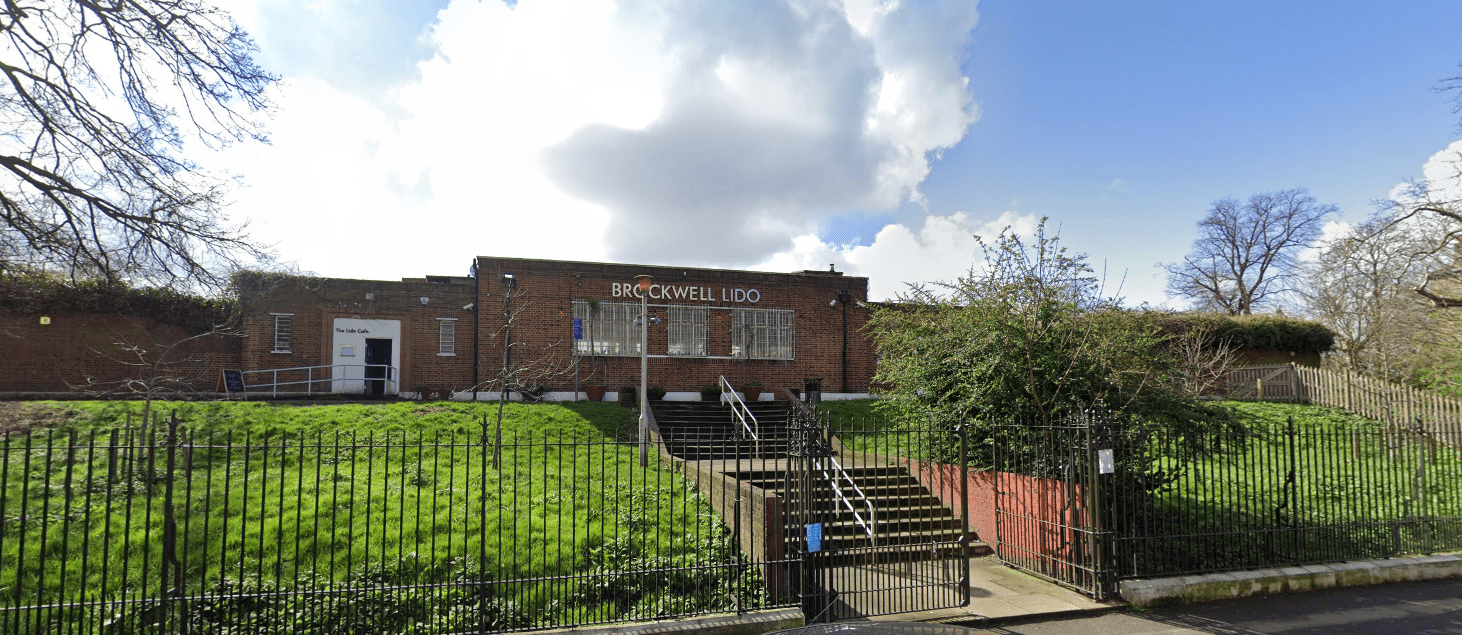
In peacetime, Brockwell returned to recreational use. The 1937 art deco lido was eventually joined by tennis courts, a BMX track, children’s playground, and miniature railway. In recent times, the park has also held a special place in the heart of one of our most famous – and celebrated – south Londoners, Adele, as it inspired her song “Million Years Ago”, about her youth spent in Brockwell Park. In 2015, she told a reporter she would not be playing any festivals that year as she preferred to be “sitting in Brockwell Park with my friends drinking cider”.
With the restoration of Brockwell Hall expected to conclude later this year, locals could well be enjoying the Grade II*-listed property for years to come.