

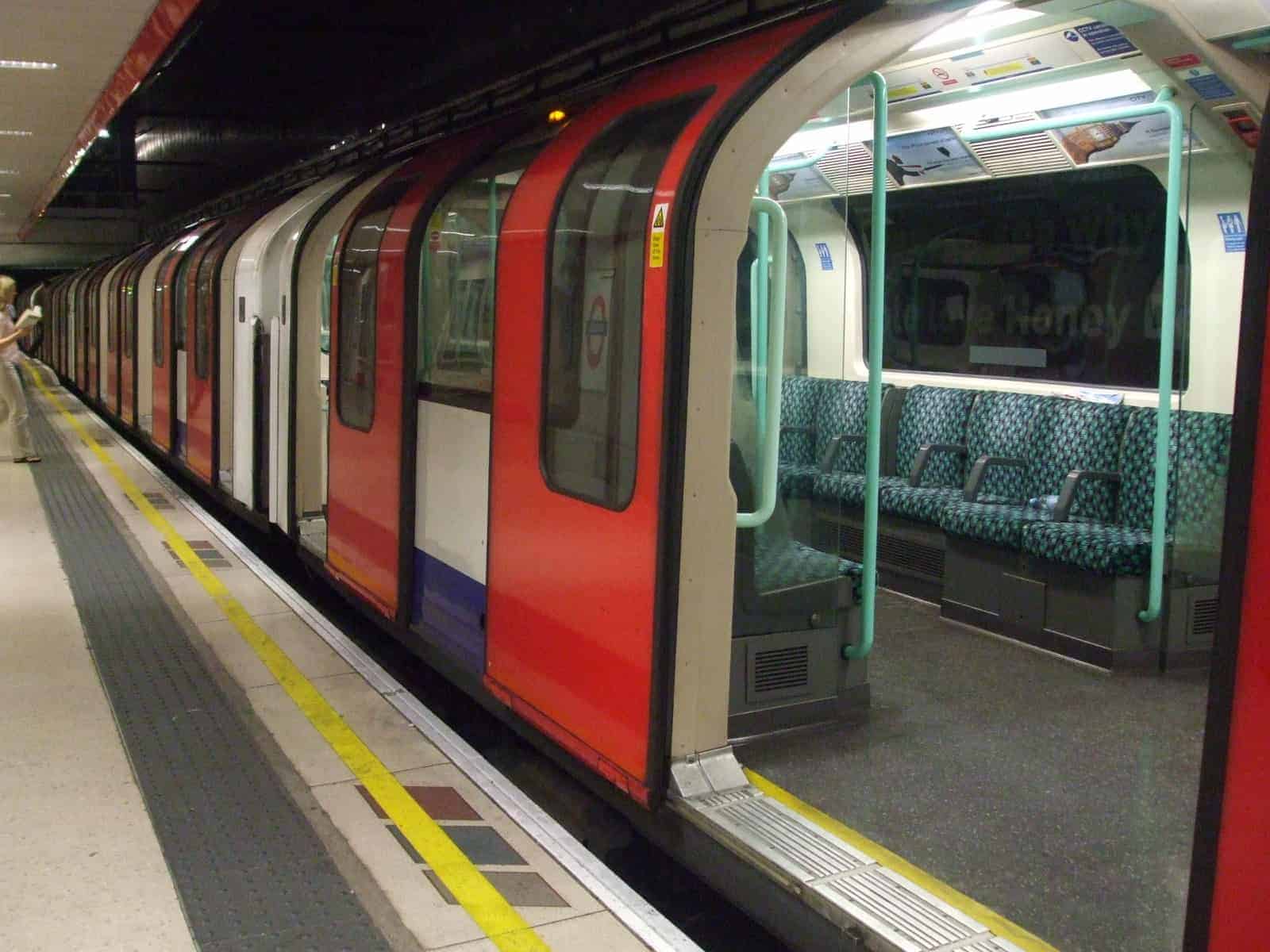








When a young Ian Wingfield stepped off the train at Surrey Docks four decades ago, he witnessed a “flattened” landscape resembling “the other side of the moon”. Southwark’s longest-serving councillor can now look back on the borough’s transformation with pride – even if there are some regrets.
Cllr Wingfield became a Labour politician for Friary ward, Peckham, on 12 October 1989, and has served as councillor for St Giles, Camberwell, since 1998. Between those two, there was a stint representing Newington in Kennington.
But the former opposition leader, who was instrumental in bringing the Tate Modern to South London, and spearheaded one of the borough’s most controversial regeneration projects, had an influence well beyond the boundaries of Camberwell and Peckham.

Southwark’s transformation into the vibrant Central London borough we know today felt aeons away when Ian first started becoming accustomed to South London in the ‘80s. “I remember getting off the East London Line at Surrey Docks and coming out of the station and the whole area was flattened,” he says.
“This was before they built the shopping centre at Surrey Docks. It was like looking at the other side of the moon… I remember with Tooley Street there was hardly anything there. It was run down, warehouses, a couple of pubs, there wasn’t really a lot down there at all.”
But if parts of Southwark had a vacant feel about them, this did not detract from the area’s political energy. Cllr Wingfield, an active Labour member as a student at the London School of Economics, from which he’d recently graduated, must have been struck by Southwark’s fervent and, at times, “tense” political atmosphere.
“Before I was elected as a Camberwell councillor, we’d had a by-election in Camberwell and it then was predominantly a white working-class community, a bit like Bermondsey,” he says.
“The BNP (British National Party) came in big time because they had their headquarters based in Bexley and all these young blokes with skinheads caused a load of trouble. It was a very tense situation for that period. They were throwing bricks and bottles if anybody with a Labour rosette turned up.”
The far-right parties would consistently stand candidates in Southwark up until the late ‘90s, but Ian says the borough is now “diverse wherever you go”. “We’ve seen off that sort of politics,” he says.
Relatedarticles


Following his election in 1989, Cllr Ian Wingfield gradually played an increasingly important role in Southwark’s political life and, by extension, its revitalisation. One of his greatest achievements is persuading the Tate Modern to establish itself on the South Bank. In one meeting with gallery bosses, an exasperated Wingfield produced an A-Z map of London to demonstrate Southwark was indisputably Central London.
“We pulled out an A-Z and just in the bottom right-hand corner was Southwark. We said: ‘Look, this is part of Central London. It’s not on the other side of Mars!’” he recounts.
“There was a lot of stereotypical bias towards South London, particularly South East London… people got as far as London Bridge Station, but they wouldn’t want to go any further. Those stereotypical images had to be broken down.”
While the fascist element of local politics subsided within a decade of Cllr Wingfield’s election, there were more twists and turns ahead. Labour lost control of Southwark Council in 2002, finally regaining it in 2010. Cllr Wingfield, who served as Leader of the Opposition, was made Deputy Leader with Labour’s victory. He was also made the Cabinet Member for Housing.
As Housing Cabinet Member, he presided over the hugely controversial sale and regeneration of the Heygate Estate. Social housing campaigners have long criticised Southwark Council for the way the Heygate, a massive brutalist estate in Elephant and Castle, was demolished. Southwark Labour sold the site to developers Lendlease for £50 million, which campaigners said was not much more than they spent on moving residents out. There have also been accusations that high service charges in flats earmarked as ‘affordable’ mean the apartments are anything but.
Two years ago, in an interview with this paper, Cllr Wingfield stridently backed the regeneration, saying it was better than the “eight years of inaction” the Liberal Democrats and Conservatives presided over. But his position appears to have softened since.
“Hindsight is always a wonderful thing,” he says. “Perhaps we should have negotiated a harder deal with Lendlease at the time… But I think the key thing was to get the building work underway as quickly as possible and to get those homes built.”

Cllr Wingfield also sees the response to the Lakanal fire, a tragedy that killed six people and injured twenty others, as a missed opportunity. The disaster took place in his electoral ward and an inquest was carried out. Many of its findings – including a review of building materials and confusing ‘stay put’ policies – were not properly taken up. Now Mr Wingfield believes more could have been done to scrutinise high-rise safety in the years after Lakanal.
“One of my biggest regrets is the council and the various governments never really took up and looked into it properly, and that’s why we had Grenfell,” he says. He adds that if there had been a full public inquiry, Grenfell probably would never have happened.
Wingfield says some of the work he is most proud of includes setting up the Southwark Civic Association and the Civic Awards, alongside his successful campaign for the council to adopt the Armed Forces Covenant, committing it to help provide employment, housing and care for local ex-service men and women.
Asked to compare the atmosphere at Southwark Council following Starmer’s victory, compared to the excitement that came with Tony Blair’s 1997 election victory, there is a flicker of cynicism – perhaps understandable after 35 years in politics.
“I think politics has changed and society has changed and a lot of it is to do with these devices [smartphones] and communications,” he says.
“I think that’s been a big game changer. Everything is more immediate, everything is soundbites. I remember when I first started off you’d have the likes of Tony Benn, who was a brilliant orator… you could listen to him till the cows come home. You didn’t have to agree with what he was saying, it was just the way he spoke.”
He continues: “That type of politics has gone now… I think the other side of it is because everything is so immediate and there’s all this information, a lot of storms in a teacup become national news – Sue Gray and Morgan McSweeney.
“It’s not the meat of politics, but because there’s this 24-hour news cycle, there’s always this pressure to get a story out and I think a lot of trivia is sensationalised and blown out of all proportion.
“What I feel is the detrimental side of that: when news is reported that way, it assists in undermining the public trust in the democratic system and that is something we all have a responsibility to be wary of.”




Your article fails to explain that the transformation in Surrey Docks and Rotherhithe starting in the 19980s was the work of the LDDC (London Docks Development Corporation) a private/public organisation set up by the then Conservative government under Margaret Thatcher. The infrastructure projects undertaken at the time including infilling, new roads and schools, community centres, shopping and leisure facilities Southwark Council had nothing to do with as it was locked into ideological warfare with the Tories and would have rather seen the area continue to lie stagnant than cooperate. In particular, the laying out of Surrey Quays for low rise inner city housing, a lot of it new family homes with gardens, and leafy green landscaping was the product of enlightened consultant designers like Terence Conran (of Habitat) who were broight in on the scheme. There was a much higher proportion of social housing provided then compared to now in Southwark’s schemes. Since Southwark regained control of planning of this area there has been a sharp fall in building quality and standards such as maintenance of what the LDDC left in basically a land grab for buy to let landlords. This has happened all over the Borough. Nothing to be proud about IMHO.
I’m afraid David Murphy misinterprets what I was stating. I was not a member of the Council until October 1989 and was not involved in council policy before then. My point was the transformation of Bankside through the opening of the Tate Modern which has had a ‘knock-on’ effect across the borough. I accept his point about the provision of social housing but this was impacted upon by changes in national policy that prevented the Council acing as a sole agent both in raising the necessary funds and in setting targets.