







A wheelchair user from Herne Hill claims he has been trapped inside lifts ’30 times’ this year alone.
Last Monday (16 February), Nathan Rollinson said he was trapped inside a lift at London Bridge station after it ‘broke down while he was inside’.
He had been on his way to a hospital appointment at Guy’s and St Thomas’s.
“It was jumping up and down for a couple of minutes like I was trampolining,” he said. “It wasn’t a very pleasant feeling.”
Nathan pressed the emergency alarm and was connected to TfL’s control centre, who told him a lift engineer was on the way but ‘could take up to two hours’ to arrive.
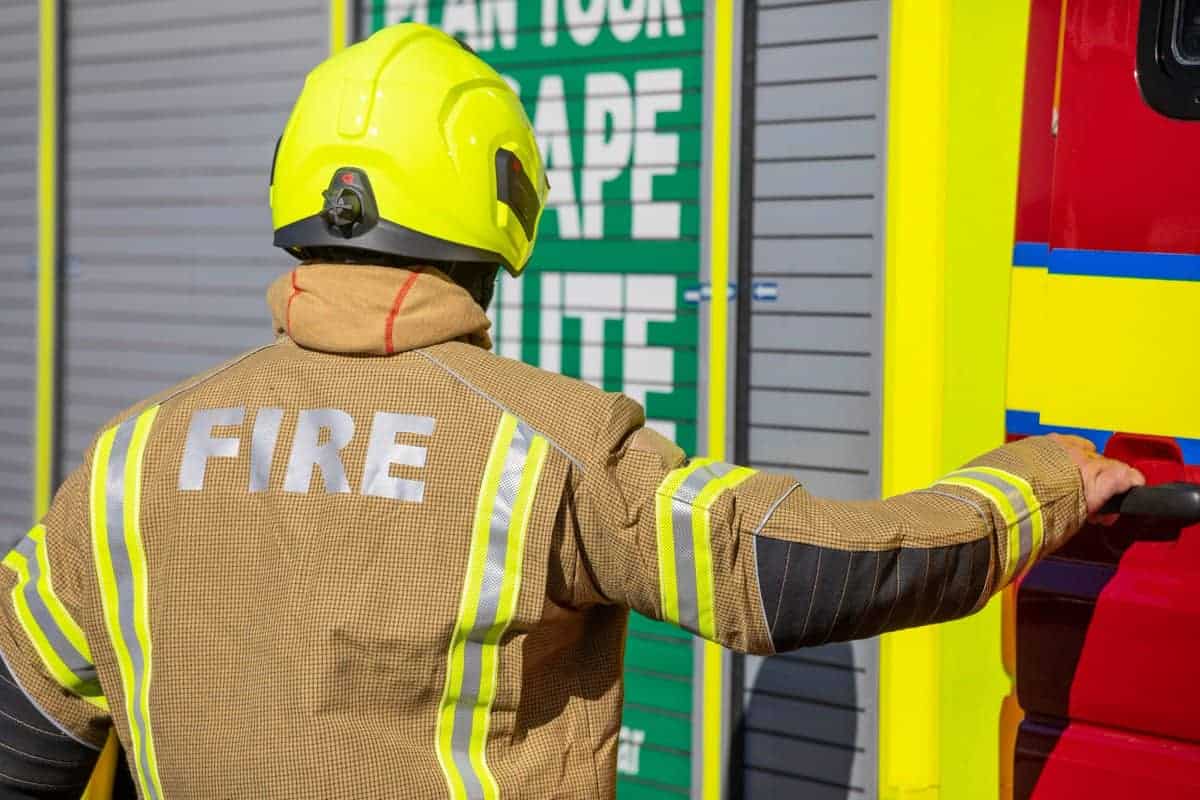
Nathan then rang the London Fire Brigade, who ‘arrived within minutes’ and manually lowered the lift to the ground floor so he could get out.
A spokesperson for the LFB said it has a “statutory responsibility to attend incidents where someone is in medical or physical danger and is trapped in a lift.”
Nathan said it was the ’30th time’ this year that he had been stuck in a station lift, adding that the lifts at Waterloo and Liverpool Street stations often break down.
“It’s happening more frequently than it used to,” he added. “The lifts are getting old and people who don’t need to use the lift are using them.”
Relatedarticles


He said he had become “practically best mates” with some firefighters because of how often he has had to be rescued.
It comes after a Southwark News video about Nathan’s experience of getting stuck in the lifts at Herne Hill station in November 2025 racked up hundreds of thousands of views across TikTok and Instagram, with outraged commenters describing the incident as “unacceptable” and “upsetting”.
One user commented: “EVERY station should be accessible! If we want people with disabilities to succeed in life why do we allow so many barriers to exist?”
Another said: “Thank you to Nathan for telling his story, this is a reality for too many of us. Trying to get to work or appointments can be so stressful when it is out of our hands when we might arrive.”
Mark Evers, who oversees Customer Insight, Strategy and Experience at TfL, said: “We are sorry to hear of Mr Rollinson’s experience while travelling on our network. We are committed to ensuring our services are accessible to as many people as possible and continue to make improvements through our customer inclusion plan.
“Our staff aim to support customers if they are trapped in a lift as quickly as possible. Sometimes specialist engineers or the London Fire Brigade are required to assist them and restore the lift service. We always look to ensure that customers are supported and are regularly updated during incidents like this. We continue to invest millions of pounds in maintaining and installing lifts as we work to improve accessibility across our network.”
Transport for London added it had a record of a lift entrapment on Monday 16 February but that it did not match the account provided by Nathan. They said they didn’t have matching records from Waterloo or Liverpool Street this year.
Last Saturday (21 February), Nathan then faced the additional humiliation of holding up a train full of passengers at Denmark Hill after no staff member was available on the platform to meet him with a ramp, despite warning staff when he boarded at Shoreditch that he would need assistance at the other end.
Rory O’Neill, TfL’s General Manager for London Overground, said: “We are very sorry that no one was available to meet Mr Rollinson at Denmark Hill station when he arrived on a London Overground service. We are committed to ensuring that London Overground is accessible to as many people as possible.
“While our staff boarded him at Shoreditch station, more thorough checks should have been made to ensure staff were available at his destination to assist him in disembarking.
“We have investigated further and unfortunately the staff member on duty at Denmark Hill was away from the station at the time because they were taking an injured passenger from an earlier service to the nearby hospital. The train driver stepped in to help Mr Rollinson disembark so that he could continue his journey. We apologise for any distress and inconvenience that this may have caused.”
Nathan said London’s other public transport options were ‘not much better’ for wheelchair users, leaving him with little choice but to continue travelling by train and tube despite running the risk of getting stuck.
The buses he uses most regularly, the 68 from West Norwood to Euston and the 468 from Croydon to Borough, often do not have working ramps, he said.
“Often they don’t come out fully, or when they come out they won’t go back in. That happens as frequently as the lifts breaking.”
TfL said every bus ramp is checked daily by the driver before the vehicle enters service, but added it would look into whether there was an issue with ramps not working once buses are moving in the Herne Hill area.
Nathan also said Dial-a-Ride, a book-ahead bus service for people unable to use public transport, can be a challenge.
“All the slots get booked up really quickly. Even then they won’t confirm until the night before. Then they will sometimes be cancelled last minute.”
He suggested there were not enough Dial-a-Ride drivers – although TfL denied there was a shortage adding that Dial-a-Ride fulfils 93 per cent of requests, with fewer than one per cent of trips cancelled, such as when vehicles break down.