








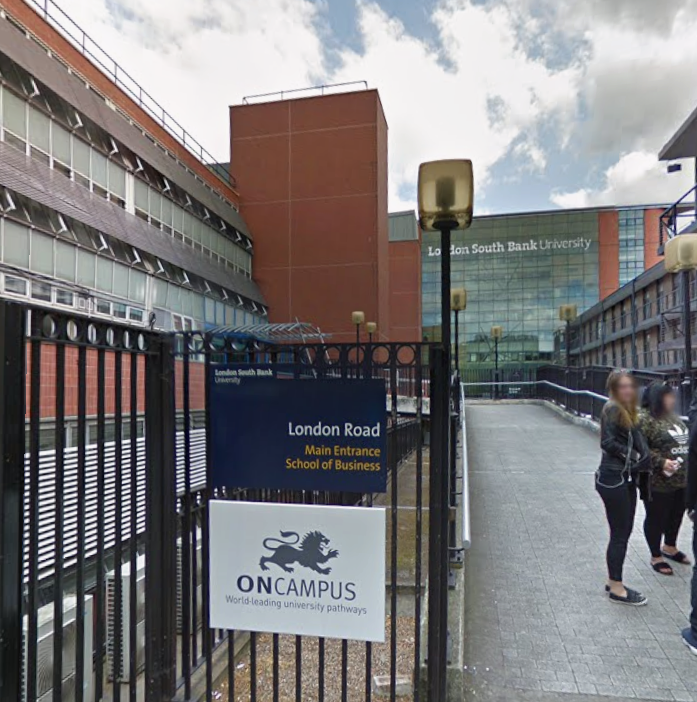
Staff at London South Bank University (LBSU) have voted overwhelmingly in favour of strike action after planned contract changes caused uproar and an growth in union membership.
The University Colleges Union (UCU) has already lambasted a new plan by the LBSU that would, they say, take academics off their current contracts, leave new staff unable to access the Teachers’ Pension Scheme, and lock staff into longer hours, with fears of mass redundancies.
As a result, the union rejected the plans, and a subsequent ballot of staff on Wednesday resulted in 89% of members voting in favour of strikes.
There are around 500 academic staff at LBSU, with a union representative claiming that a considerable majority of staff were in the union and that 70 more had joined since the announcement of the contract changes, with ‘more joining each week.’
An LBSU staff member and UCU representative said: “As of today, UCU has formally registered a dispute over the university’s refusal to agree to our request to halt this proposal, to allow for meaningful negotiations. We will now be progressing this matter towards preparing for strike action.”
UCU branch chair and associate professor in nonlinear dynamics Geoff Goss said: “The staff are very concerned and people are feeling very anxious.
“There was already a series of redundancies two years ago and we were led to believe at the time that the relationship would improve after that…it’s very disappointing to see another fundamental change to our working situation.”
The union had expressed fears that contract changes at LBSU would leave staff vulnerable to a ‘fire and rehire’ scheme, a claim the university has outright rejected.
‘Fire and rehire’ schemes involve the mass firing of staff within an organisation before other workers are rehired at lower wages, with the policy brought to attention when P&O Cruises sacked 800 staff and replaced them in 2022.
Relatedarticles





Goss clarified that under present legislation, these schemes were still legally possible, but that the Employment Rights Bill making its way through Parliament would introduce measures to clamp down on it.
He also cited that the ballot had been delayed until this week due to ‘dozens’ more staff members at LBSU joining the union in order to vote against the plans.
Goss said: “This is a watershed moment. The university’s been here since 1893 and it’s a part of the local community – we want to resolve this.”
One teacher at the university, who wished to remain anonymous, said the move was ‘quite a shock’. She said: “Effectively, every single member of staff is at risk of redundancy…it really feels like an attack on the academic staff, due to the university’s financial position.
“We were expecting something was coming, but not like this…we really hope they stop and think and start to talk to us.”
UCU general secretary Jo Grady said: ‘LSBU is putting academic jobs at risk unnecessarily…given the strength of opposition to these changes, we hope that we do not see tactics like those seen at P&O, or that LSBU will try to force them through under the guise of redundancies.”
Responding, London South Bank University rejected claims made by the UCU. A spokesperson said: “London South Bank University has not threatened to fire or rehire any of its academic staff…the University is keen to discuss its proposals with recognised Trade Unions and launches the first in a series of three question and answer sessions with staff on 15 April 2026 which will be complemented by individual and group conversations with impacted staff.
“Like almost every university, LSBU faces unprecedented financial challenges and is taking action to reduce its deficit.”
Professor Tara Dean, Provost at London South Bank University said: “The challenges facing higher education have forced us to be bold and take a radical approach to meet the needs of our students and secure the University’s long-term future.”
Senior nursing leaders last week sharply criticised LBSU’s planned changes and similarly called for the university to rethink its proposed cuts to academic posts.