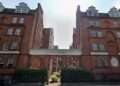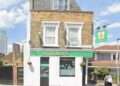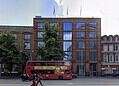



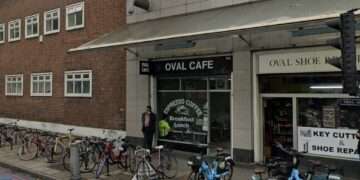


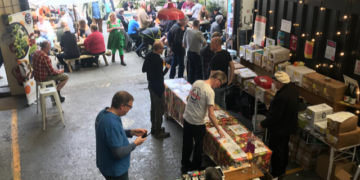


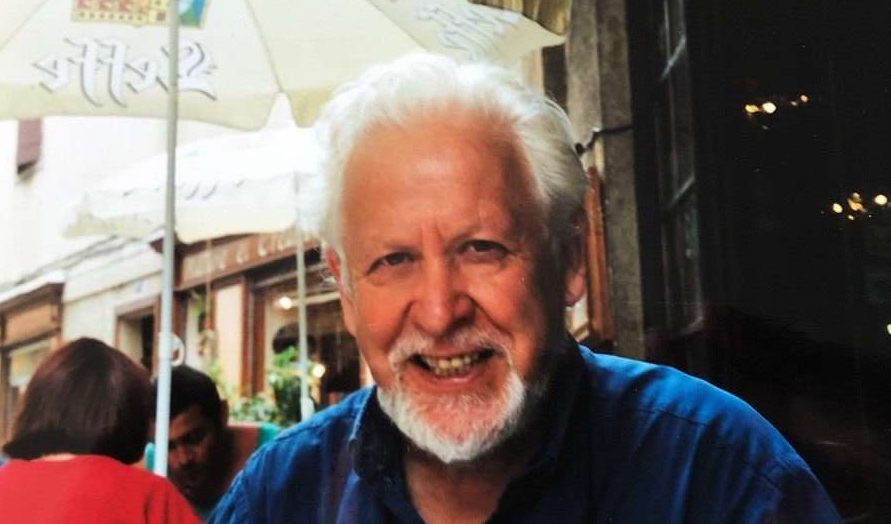
In the late 1980s, Peckham stood on the brink of annihilation amid plans to run a high-speed rail link through its historic neighborhood. Unfortunately for British Rail, a certain Derek Kinrade had just moved to the area—and fallen in love with it.
Over the following decades, the talented civil servant emerged as one of the staunchest defenders of Peckham and its unique culture. Derek passed away aged 94 on June 1, 2024. Southwark News tells the story of his life…
“I fell in love with Peckham. I liked the fact it was down-to-earth, had a multicultural society and, on the whole, got on well. It was a bit downtrodden, a bit depressed and had the occasional murder. But it was an interesting place and a very artistic place.” Those were Derek’s words in a 2022 interview following the publication of Peckham Personalities—a book exploring the weird and wonderful historical figures that had lived in the area. Derek, added: “When we came [to Peckham] it was ‘up and coming’ and now it’s ‘up and come’.”
Derek Kinrade was born on October 19, 1929, in Toxteth, Liverpool, to parents Alice Hodgson and William Kinrade. His father served as a rifleman in World War One and was injured at the Somme. On his return to England, Derek’s father went back to work on the docks. Alice, a housewife, was seen as the rock of the family. They lived in an end-of-terrace house, three up, two down, with a yard on the edge of a herbal brewery and a factory. Times weren’t always easy. The family was raised in the shadow of World War One, and Toxteth was a severely deprived area. But the family was happy and took joy in their comforts. There was a coal fire, where Derek’s father heated strong tea, and a piano in the front parlor was often played.
Music was a constant in the family home. Derek’s parents, in those pre-war days, were in their prime and always trying to have fun. At home, they often held concert parties where friends gathered to perform in local church halls. Songs like ‘Keep Your Sunny Side Up’ and ‘Go Wash an Elephant if You Want to Do Something Big’ were popular. This sparked Derek’s lifelong passion for music. His wife Nancy said “every closet in the house is filled with records” and there could be 10,000, often collected from the charity shops in Liverpool, the PDSA warehouse in Islington and even along Rye Lane.
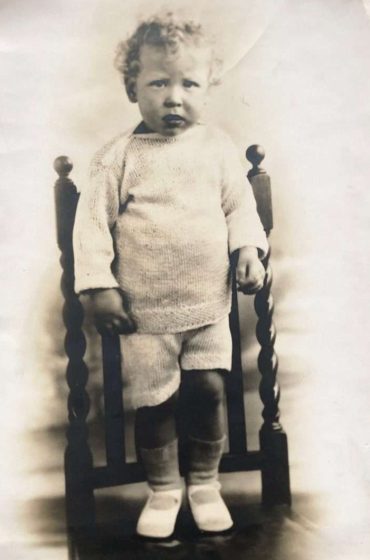
As a youth, Derek was fascinated by the Führer and would impersonate his tirades, while having no idea of anti-Semitism. On September 2, 1939, aged nine, he was evacuated to Northwich in Cheshire. The new experience began badly. Each of the children was given a one-pound slab of Cadbury’s chocolate on arrival which Derek immediately ate, consequently being terribly sick. The family who took Derek in were not cruel, but neither were they kind. They had boys of their own and he was picked on for not being able to use a knife and fork properly.
He was wretchedly homesick and asked to be sent back to Liverpool after only seven weeks just in time for the horrendous blitz. St Silas Street was close to the docks so was heavily bombed. The family sheltered in a cupboard space under the stairs, where Derek calmly cut notches in the woodwork to mark the explosions. The air raids were something of a game for the children. When the ‘all-clear’ siren sounded, they all ran out to collect shrapnel. Derek remembers asking passing men for cigarette cards, perhaps a start to his instinct for collecting. He remembered his father taking him out to walk through the rubble of the Liverpool docks and the ruins of the old Custom House. Queen Victoria’s statue remained intact among acres of rubble.
He followed the war with intense interest. For a young boy, these were heady days, the Dunkirk evacuation, though a calamity, was heroic. The aerial Battle of Britain was glorious. Churchill’s speeches were truly inspirational, and then, when the tide began to turn, came the North African campaign led campaign led by Field Marshall Montgomery. He was spectator to what he saw as truly exciting and a great adventure.
Derek attended the Liverpool Institute, leaving in 1944 aged fifteen, having obtained a Certificate of Education with distinctions in English, Literature, and Mathematics. He did National Service in 1947, an experience he didn’t enjoy. He then married his first wife, Vera Tarbuck, in 1949 when they were both just nineteen. Together, they had three children: Stephen, Cathy, and Philip. They divorced in 1975 and Vera passed away in 1988.
Relatedarticles



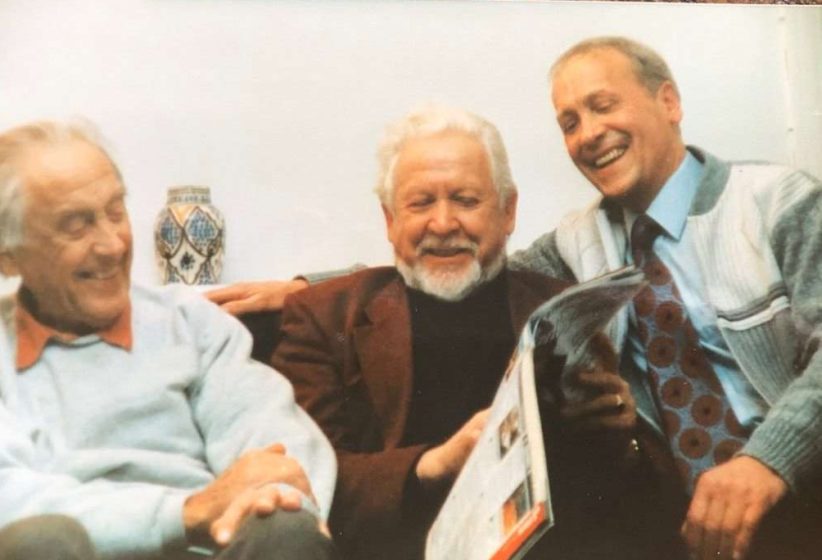
Derek passed the highly competitive civil service entrance exam, initially joining first the Inland Revenue and then HM Customs and Excise. He eventually became co-head of the City VAT Office and finished the last nine years of his civil service career as the Director General’s Adjudicator for the Office of Fair Trading. In 1992, he was awarded the Imperial Service Order for services to the Office of Fair Trading. Asked by the Queen how long he had been in civil service, he answered 49 years. “That’s a very long time,” she replied. In the 1970s, he also served as a justice of the peace, which saw him adjudicate on crimes in the lower courts.
Derek moved to Blenheim Grove, Peckham, in 1988 with his second wife Ann Darnbrough. His first contribution was to join the campaign to resist the Channel Tunnel Rail Link planned through Peckham and Camberwell, and he eventually chaired the protest group PEARL. If it wasn’t for Derek’s leadership, and the contribution of many others, much of the area including Blenheim Grove and Lyndhurst Way and roughly 170 homes would have been annihilated. Many more properties and households would have been severely impacted by the years of construction work. But Derek’s hard work ensured the campaign garnered national attention.
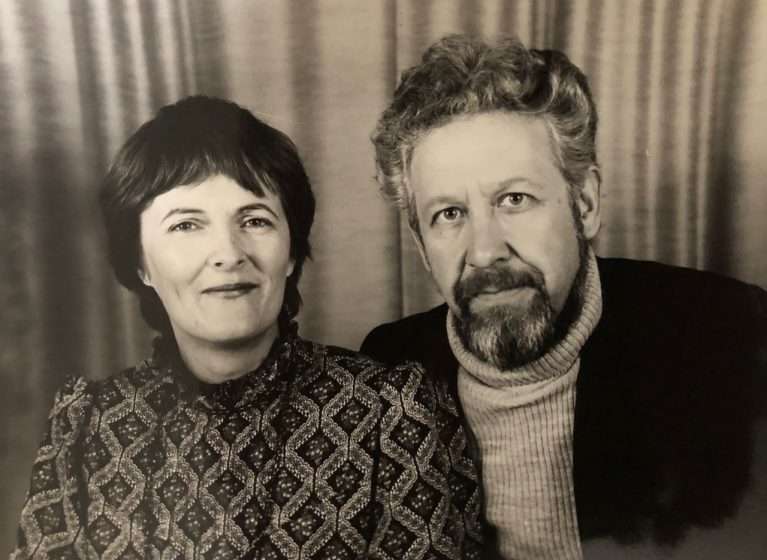
They were successful. The route was directed through Stratford instead, affecting just 115 homes. The fiery battle for Peckham’s soul had been won and Derek gained many lifelong friends in the process. It also convinced him Peckham needed to be protected and deserved respect. He was introduced to local history by lifelong Peckham resident Deborah Elliott and thus began his historical mission. With Deborah as a researcher and collaborator, Derek wrote many articles and books on the town’s personalities and buildings. These articles filled many of the Peckham Society’s publications, Peckham Society News. Probably the gem and ultimate contribution to the history of Peckham is the recently published Peckham Heritage: Past, Present, and Future, written by Derek with architectural notes by local architect and friend, Benedict O’Looney.
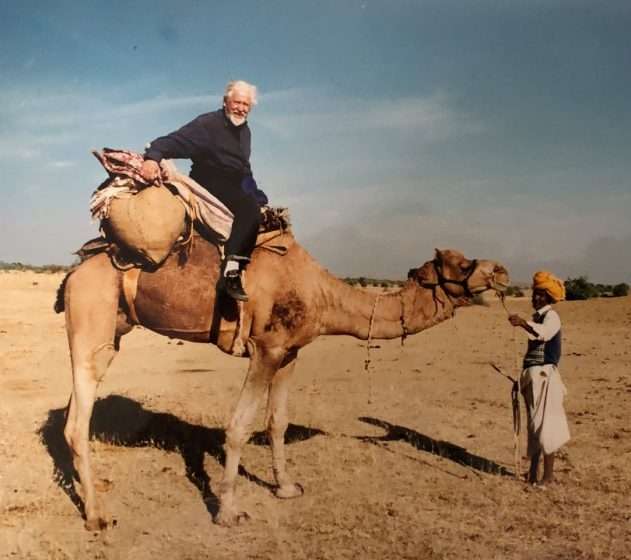
Alongside his Civil Service job, he joined the National Information Forum, a charity devoted to improving the provision of information to disabled people and other disadvantaged groups. He served as their honourary treasurer and company secretary and, with his wife Ann, co-authored a number of books including eight editions of Directory for Disabled People and six editions of Motoring and Mobility for Disabled People. He was especially proud of their joint venture, The Sex Directory, a guide for sexual problems, published at a time when AIDS and HIV were little understood. Ann sadly passed away in 2013 after a long, happy marriage.
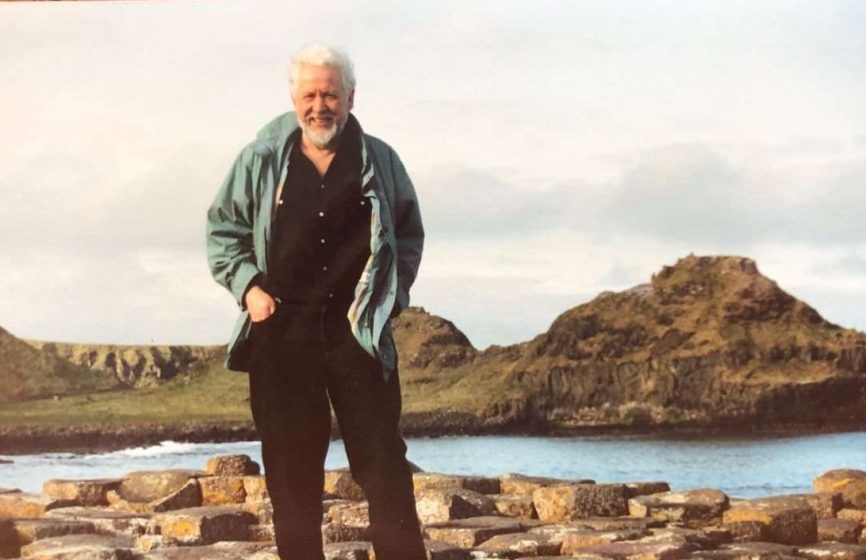
Derek was very interested in politics and of a liberal bent. Though he did not actively campaign in any way, he would never miss Prime Minister’s Questions and ‘round the dining room table’ sessions with friends would often involve his thoughts and views on various things happening in the political world. He lived through twenty Prime Ministers, one more than the late-Queen. His favourite of all was Clement Attlee and he felt Boris Johnson was too “flamboyant”.
In 2016, Derek met Nancy Coleman-Frank, a Californian who had traveled to the UK to research the eminent 18th-century botanist Peter Collinson. They discovered they had much in common, romance blossomed, and the couple wed on November 25, 2018. Together they went on to transform the American Garden in Peckham Rye Park, creating a charity to support this project. Derek described his wife, who helped inspire the book Peckham Personalities, as “miraculous.” Asked what it was like to fall in love later in life, Nancy said: “It’s this wonderful sense of somebody you really care about, somebody you really want to be with, somebody you fit together with really well. It’s really heartwarming to find someone like that especially when you’re older. It was an adventure for both of us and it was a good adventure.”
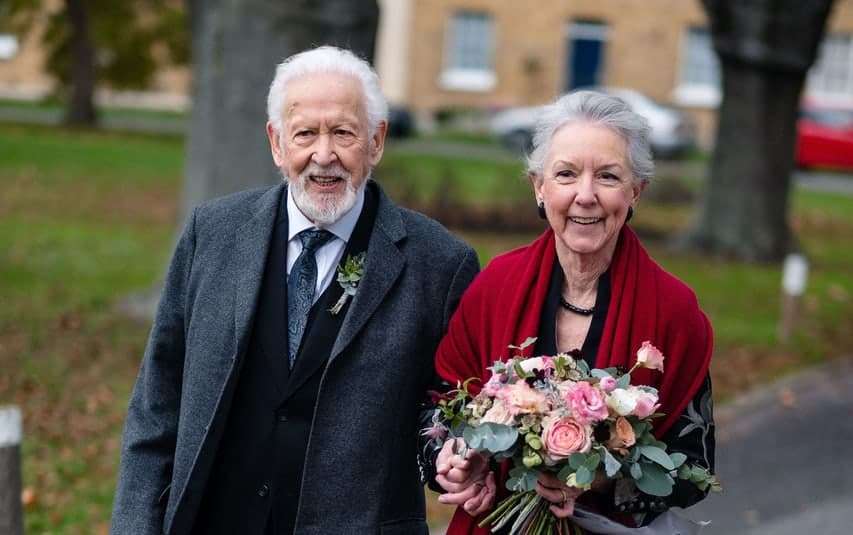
Derek is survived by his wife Nancy Coleman-Frank, brother Lawrence Kinrade, children Cathy Mason and Philip Kinrade, step-children Philip Darnbrough, Melissa Holritz, and Christopher Frank, as well as numerous grandchildren and great-grandchildren, nieces, and nephews.
The family requests, as Derek wished, donations be made to The American Garden in Peckham instead of flowers. www.americangardenpeckham.org
The public will be invited to a tree-planting ceremony in The American Garden in honor of Derek in the autumn, with more details set to be announced in due course.