







A local group for pensioners is calling on May election candidates to declare whether they will support over 55s people if elected – spanning key issues like the cost of living, social housing crisis and accessible transport.
On Thursday 7 May, residents across the borough will vote for ward councillors to make up Southwark Council, with 63 councillors to be elected across 23 wards.
Southwark Pensioners Action Group (SPAG), who campaign for the rights of over 55s in the borough, have created a ‘Manifesto for Older People’, which they have circulated to every candidate standing this May.
Candidates are then invited to declare whether they will champion the pledges if elected and take on board SPAG’s suggestions.
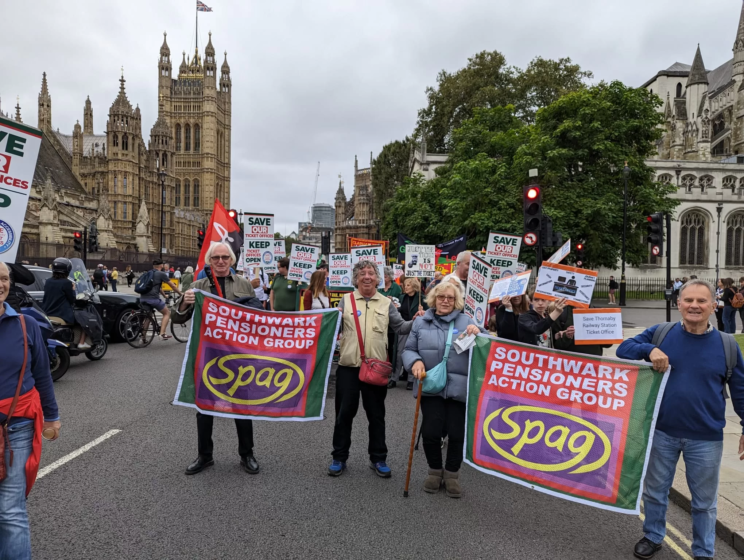
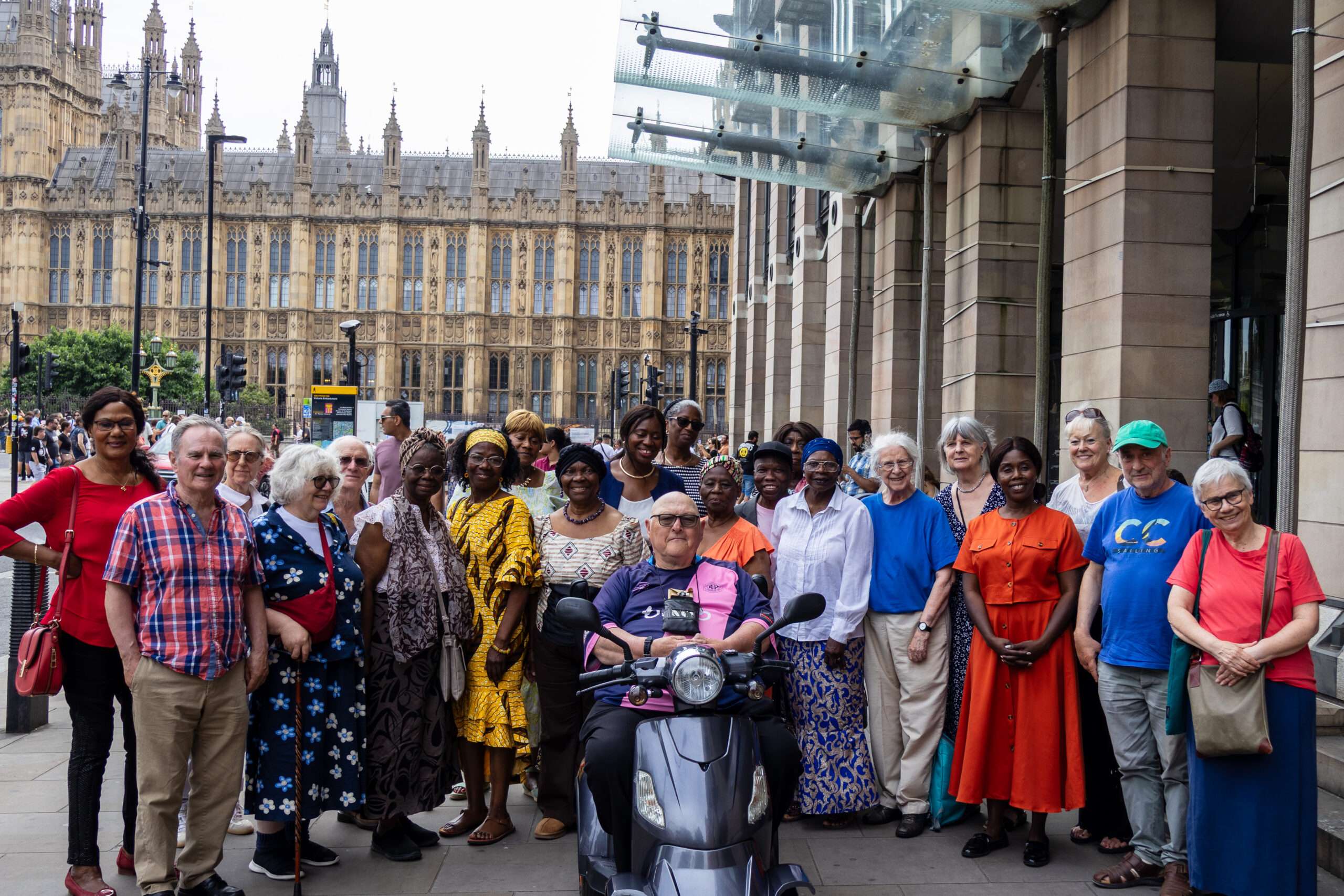
Credit: © Matthew Pellow, via Southwark Pensioners’ Centre.
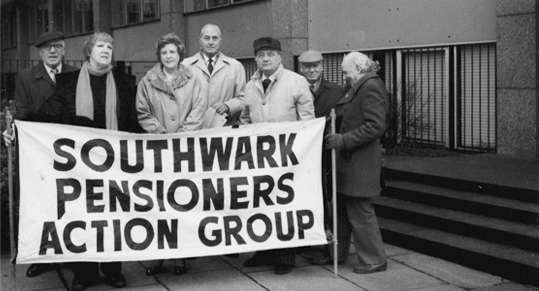
Credit: © Southwark Pensioners’ Centre.
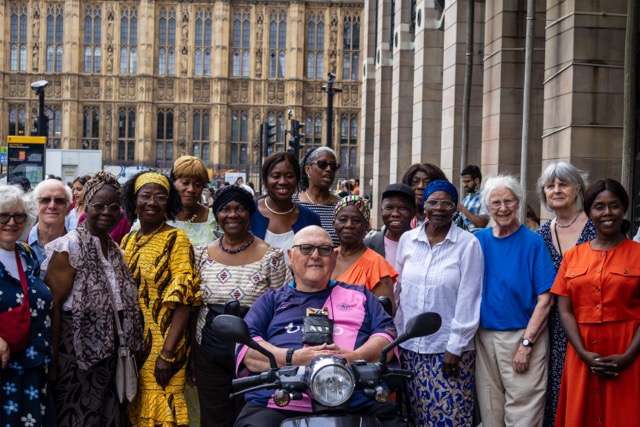
Credit: © Matthew Pellow, via Southwark Pensioners’ Centre.
Their manifesto approach is an alternative to organising a hustings event, where election candidates typically answer questions from the audience.
The group says election candidates can actively pledge their support to the demands, making a commitment to the electorate that they will to look out for older people.
Census data reveals that the over 55 group continues to grow and made up nearly a quarter of the borough’s population back in 2021, but SPAG say that the needs of people older than 55 are not being given ‘sufficient priority’ in local government.
SPAG was founded in 1980, as the campaigning arm of Southwark Pensioner’s Centre. They host regular ‘forums’ on a specific topic of local or national importance and invite guest speakers or interest groups.
They used a similar approach for the 2022 elections. Steve Lancashire, former councillor from 1994 to 2002 and coordinator of SPAG, said: “SPAG has been campaigning on improving the conditions for older people since the 1980s. We carried out a similar exercise in 2022 and, although there have been some improvements over the past four years, so much more still needs to be done.”
Relatedarticles




Find out more here: https://southwarkpensioners.org.uk/what-we-do/advocacy-and-campaigning/
Candidates are invited to declare support for the following pledges, covering different aspects of local government responsibilities:
Cost of Living:
SPAG are asking election candidates to ‘campaign for higher basic benefits’, including the state and over 80s pension.
The state pension is currently £241.30 per week for 2026-27 tax year if you have paid National Insurance for more than 35 years.
Local councils in the UK do not decide the amount given for state pensions – that is decided by the Department for Work and Pensions (DWP) – but they can use their role as a councillor to lobby the government or call for policy changes.
In the manifesto, candidates are also urged to build on the work the council has done in ‘assisting the most vulnerable experiencing fuel poverty’. In July last year, Southwark Council awarded over £400,000 to 24 green projects for the second year in a row, including ones with a focus on reducing food poverty.
This extends to warm spaces, of which there are over 60 in the borough, and community kitchens where attendees can get a hot meal, drink and receive cost of living advice.
SPAG say there is an ‘appalling situation of food inflation’ and urge candidates to support food banks and work with supermarkets to stop food going to waste. They favour the food bank model over the food voucher system, which they argue ‘strips recipients of their dignity’.
”Housing emergency’:
SPAG are urging councillors to declare a ‘housing emergency’ and increase the number of social-rent homes available for older people.
They suggest that homes should be built by ‘directly employed, unionised building trades workforce’, which means they want the council to hire construction workers directly, instead of outsourcing work to private developers or contractors.
The manifesto also supports the ‘abolition’ of the Right to Buy scheme, which was introduced under Conservative Prime Minister Margaret Thatcher in 1980 and allows council tenants to buy their homes at a discount.
Right to Buy is a national policy, so councils can’t directly abolish or opt out of the scheme. They do, however, process applications, complete sales and receive a portion of the proceeds. They can also build new homes to replace to ones sold.
They say that the council should oppose policies that push council rents higher towards market levels and be fully open about how money is spent on upgrading homes, like insulation or heating.
Social and home care:
SPAG ask for older people to be involved in the process when ‘determining quality standards ‘ for nursing and care homes in the borough and for a more open system of monitoring and reporting the performance of such services.
Local councils currently work closely with the Care Quality Commission (CQC), the watchdog for adult social care, to ensure standards are met in care homes, but argue more collaboration should happen.
The group calls for two new care homes to be built in Southwark with a specific focus on ‘dementia and chronic health problems’, using input from older people and experts.
They also want to bring all care services ‘in house’, having all of them free at the point of need, meaning the council directly runs them instead of outsourcing them to private companies.
For vulnerable older people needing support to live independently, SPAG highlight Hammersmith & Fulham council as the only UK council that has abolished home care charges and urge candidates to push for the same in Southwark.
Health:
SPAG also highlight health services, which are mostly run by the NHS South East London Integrated Care Board (ICB), rather than the council.
However, they argue the council still has a role in influencing and scrutinising health care provision due to this partnership. The group calls for an end to NHS privatisation, greater transparency, and improved funding and staffing.
The manifesto also urges better access to vaccines for older people, stronger involvement of GPs in vaccine delivery, improved primary care provision, the return of patient participation groups, and the reintroduction of walk-in medical services for those unable to access online systems.
For mental health, they want the 24 hour crisis centre at Maudsley hospital in Camberwell to reopen, offering a ‘walk-in place of sanctuary for those in crisis’.
Transport:
While some transport pledges, such as bringing transport under public ownership, fall under the responsibility of TfL or the government, SPAG’S manifesto urges candidates to campaign on a local level to make transport more accessible and affordable.
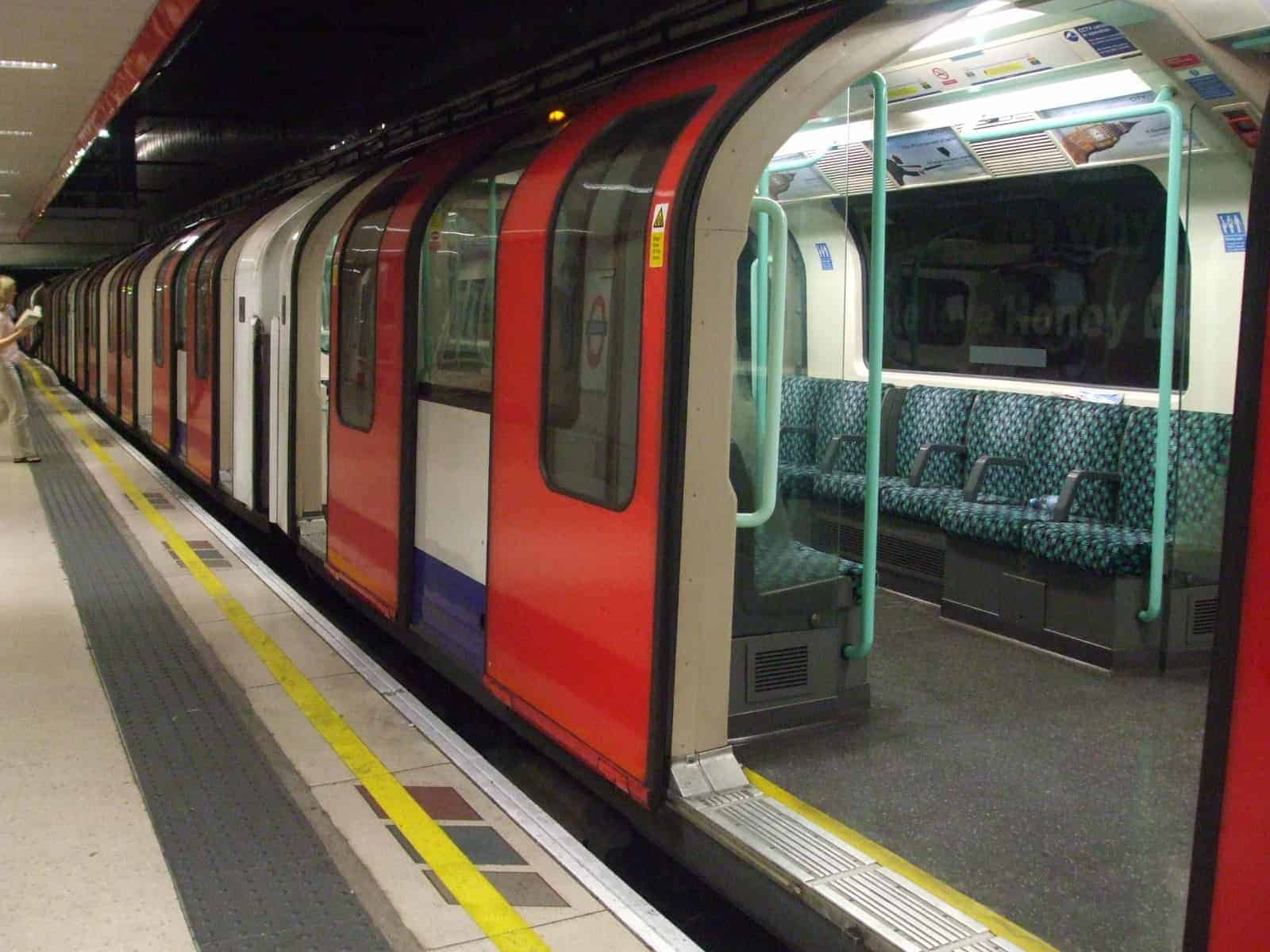
SPAG urge councillors to support the campaign for lifts to platforms at Peckham Rye, Elephant and Castle and Nunhead stations and by removing clutter and rubbish from pavements around the borough.
When it comes to cycling, SPAG wants the council to ‘control the use of e-bikes and scooters’ around the borough and cite issues like cyclists riding on pavements.
Southwark Council, in partnership with TfL, will be laucnhing the Better Bus project, backed by £10 million in funding. The funds will go towards improving bus reliability and journey times by up to 30 per cent along major routes.
SPAG want to ‘ensure the Better buses funds recenetly allocated for the busway in Southwark are consulted on and well spent.’
Climate emergency:
The group recognises the ‘good work’ the council has been doing to tackle the climate emergency, but say more need to be done to ‘make people aware’ of the crisis, particularly on the risk of flooding.
A report by insurance firm Aviva last year found that 90 per cent of homes in Bermondsey and Old Southwark are at risk of river and coastal flooding by 2050, the largest proportion of any constituency in England.
However, speaking to The News last year, two flooding experts said that flooding in Bermondsey was ‘extremely unlikely’.
Planning:
The manifesto calls for planning policy to prioritise the housing needs of Southwark residents, particularly older people and those with disabilities, and to increase the number of homes built at council-set rent levels.
It also argues that recent planning decisions are moving in the ‘wrong direction’ and should be reversed, with greater transparency and more opportunities for residents to take part in the planning process.
Safety and Security:
The manifesto calls for older and vulnerable residents to be more involved in shaping local safety measures.
It also highlights concerns over the closure of the last high street bank in Camberwell, warning that it could increase isolation for those unable to use online services.
In response, it calls for the creation of three new banking hubs in the borough to ensure continued access to face-to-face financial services.