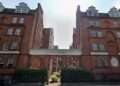









For the last 300 years Guy’s Hospital has stood at the centre of the community in South London.
Each year the doctors and nurses at the hospital welcome thousands of babies into the world and care for many more patients.
The hospital’s amazing work today is all thanks to the work of local bookseller and philanthropist Thomas Guy, who gave his name to the hospital in 1725.
Born just down the road on Fair Street in 1644, Thomas Guy ran a bookshop and publishing house in the City of London.
Controversially, the man who would go on to found the hospital we know today as Guy’s made his riches profiting off the British Empire.
Thomas Guy bought up government debt issued to sailors which he swapped for shares in the South Sea Company, a British joint-stock company involved in transporting tens of thousands of enslaved Africans to colonies in the Americas between 1710 and 1720.
Tody we rightly condemn those who profited off the slave trade throughout history and now a panel next to his statue outside the hospital addresses the source of Guy’s wealth.
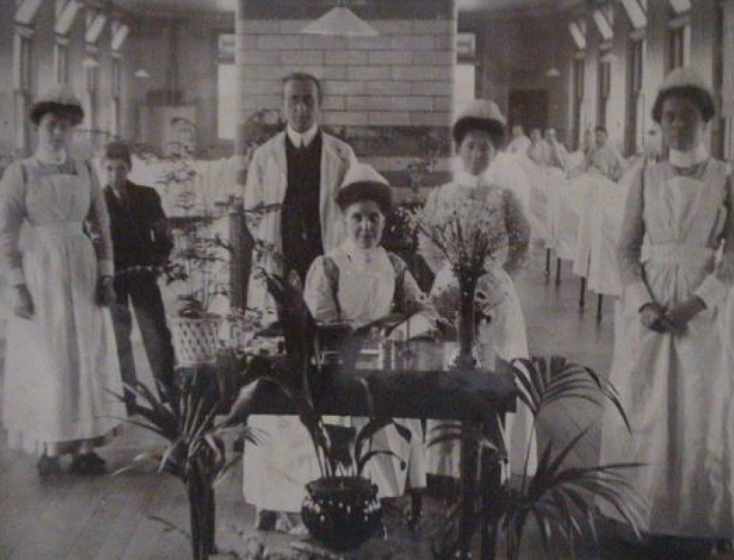
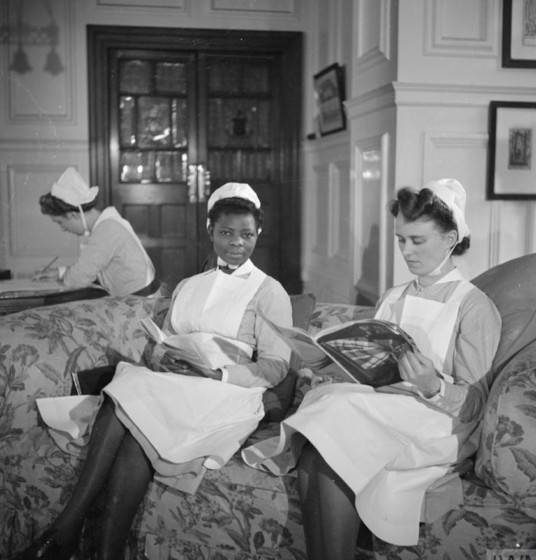
Guy was a governor at St Thomas’s Hospital from 1704. At the time it was one of just two hospitals in London, along with St Bartholomew’s in the City of London, which had survived Henry VIII’s dissolution of the monasteries in 1536. The 18th century was a different era of medical care; since treatment had to be paid for, most people stayed at home and were cared for by hired nurses or family members.
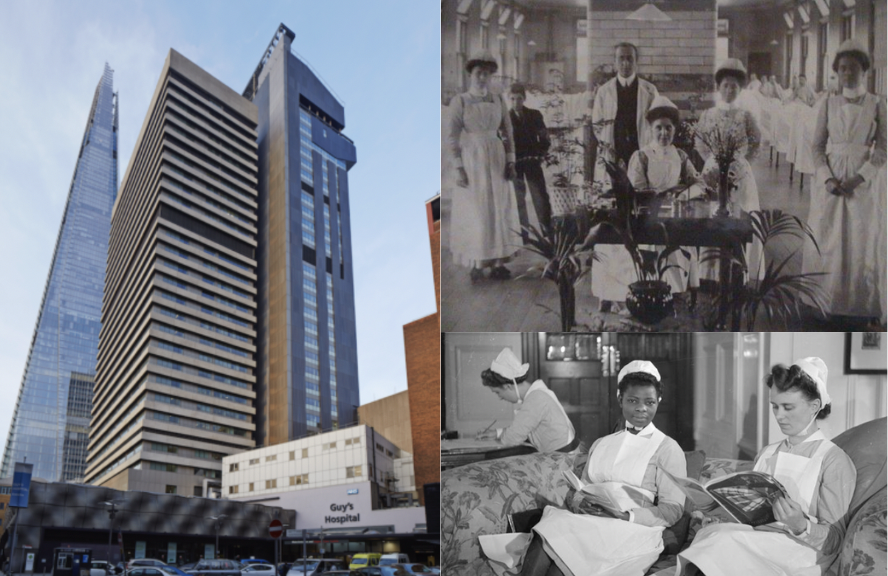
Nursing wasn’t the specialist profession that it is today; in fact Florence Nightingale, regarded as the founder of modern nursing, rather disdainfully claimed at the time that it was left to ‘those who were too old, too weak, too drunken, too dirty, too stupid or too bad to do anything else’.
Relatedarticles

In the 1720s St Thomas’s Hospital wouldn’t treat patients with long-term or incurable conditions, or those who were mentally ill.
After a concerned physician pointed this out to Guy, the philanthropist got to work establishing a new hospital which would cater to those patients who weren’t admitted by St Thomas’s.
Guy successfully arranged to lease land next to St. Thomas’s – which back then stood where Guy’s Hospital is today – on the south side of St Thomas’s Street for a new ward.
It opened its doors in 1725 with a stated mission to care for “the indigent and the wretched who should be discharged from other hospitals as incurable”.
Sadly Guy himself never lived to see the moment for himself – he died just a week earlier at the age of 80. In his will he asked for the hospital’s scope to be widened so it could care for “four hundred poor persons, or upwards, labouring under any distemper, infirmity or disorders thought capable of relief by physic or surgery.”
Today Guy’s has 400 beds and several buildings – but to start with just sixty patients were admitted. Those early patients were expected to abide by a strict disciplinary regime and had to help clean the wards and fetch coals.
Those who disobeyed faced a range of punishments. To be caught swearing would mean no meals the following day.
Blocking the toilets was by contrast a far more serious offence and resulted in immediate discharge from the hospital.
It wasn’t just the disciplinary regime which we can scarcely recognise today; in the 1700s the wards were often filthy and crawling with vermin, while the hospital beds with their wooden canopies were magnets for bedbugs.
Matters got so dire that in 1735 the hospital paid £20 – the equivalent of £2,200 in today’s money – to get rid of the pests.
Over the 18th century the hospital leased more and more land from St Thomas’s as it sought to expand into new wings.
The process continued into the nineteenth century with the 1806 purchase of the Maze Pond Estate to the south of the hospital.
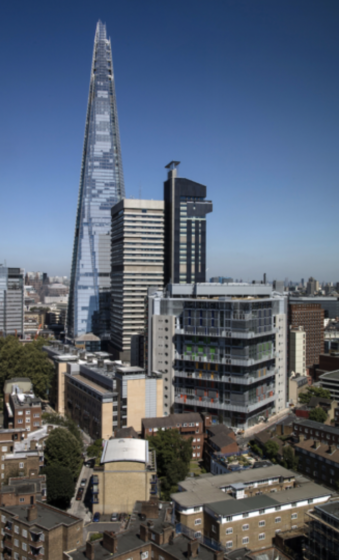
Throughout the 18th century and early 19th Guy’s and St Thomas’s happy co-existed as two separate neighbouring hospitals; but in 1847 they were forced apart by plans to extend the railway from London Bridge to Cannon Street and Charing Cross, the path running directly across St Thomas’s.
St Thomas’s had to be moved down to Walworth, where it was temporarily based out of buildings which once formed part of the Royal Surrey Zoological Gardens, before moving to its new home in Lambeth on the banks of the Thames in 1871 – where it still stands today.
The physical division unleashed a period of competitive rivalry between the two hospitals, particularly on the rugby pitch.
The Second World War was a dark chapter for Guy’s, as the hospital was badly bombed, unleashing a wave of building activity in the second half of the 20th century.
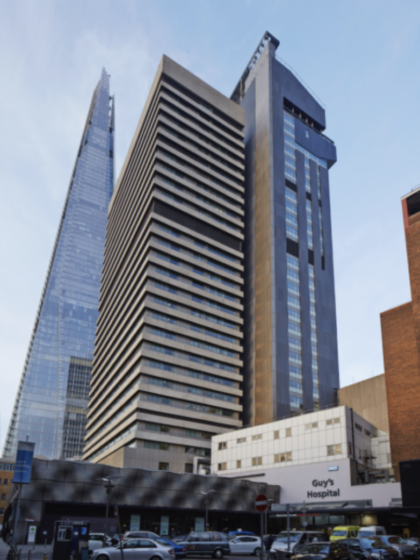
Between 1959 and 1963 an eleven-storey surgical block was built. Soon after in 1976 the iconic 34-storey Guy’s Tower was built opposite London Bridge Station, at one point the tallest hospital building in the world until it was surpassed by the O’Quinn Medical Tower in Houston in 1990 (both were dwarfed by the Hong Kong Sanitorium and Hospital in 2008.)
Guy’s might have changed unrecognisably over the years – but what hasn’t changed is the hospital’s reputation for pioneering research.
The hospital is famed for its research into kidney disease – a reputation which stretches back more than 200 years to the time of Richard Bright, an early pioneer in the field who is regarded as the founder of modern kidney treatment.
The first successful kidney transplant took place at Guy’s around 150 years later in 1967 – today the Department of Renal and Transplant at the hospital is one of the largest in the UK and cares for patients across south-east London, Kent and even the Channel Islands.
Likewise the hospital leads the way in the UK when it comes to cancer care, consolidated in 2016 with the opening of the new Guy’s Cancer Centre, home to the latest facilities, top specialists and pioneering treatments.
Guy’s and St Thomas’s returned to their tradition of working collaboratively together after the Second World War. In 1982 the Guy’s Medical School merged with St Thomas’ Medical School, forming the Medical and Dental Schools of Guy’s and St Thomas’ Hospitals.
In 1991 the Guy’s and St Thomas’ NHS Trust was formed, with the two hospitals working together to plan the health services all over south east London.

Sir Simon Hughes, the Liberal MP for Bermondsey, which includes Guy’s, between 1983 and 2015 said representing the hospital in Parliament for 32 years was a “privilege”.
He paid tribute to the “most skilled and often lovely consultants, doctors, nurses, chaplains, and people in a hundred other professions and jobs – the care, the love, the expertise – and above all the loyalty.”
Sir Simon also recalled the ‘Save Guy’s Campaign’ in 1994, when more than a million people signed a petition opposing the government’s proposals to shut the emergency ward at Guy’s Hospital. The ward eventually closed in 1998.
He said Guy’s was a place he “visited frequently, including on Christmas Day in 31 of my 32 years as MP, to welcome into the world tiny new babies in incubators and bigger babies in cots, to be with families alongside their loved ones in their health crises, struggles, convalescence and end of life hours, and to see the dedication of all the staff.”